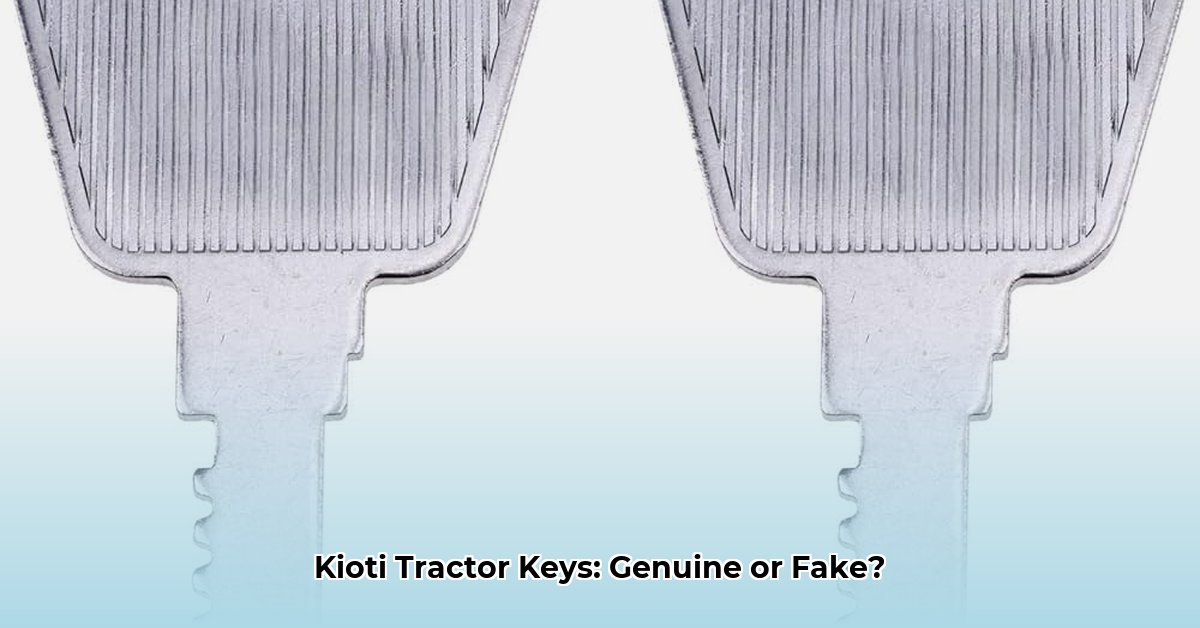
Losing your Kioti tractor key is frustrating, but replacing it doesn't have to be difficult. You have two main options: a genuine Kioti key or a more affordable aftermarket alternative. This guide compares these options, helping you choose the best key for your needs and budget. We'll focus on the genuine Kioti key and the Ilco key pack (often number 1695), discussing their pros, cons, and compatibility. For more information on Kioti tractors, see this helpful guide.
Genuine Kioti Keys (Part Number: T5520-75191)
Genuine Kioti replacement keys, often bearing part number T5520-75191 (though this may vary), offer guaranteed compatibility with a wide range of Kioti tractor models. These keys are typically sold as two-key sets and may also fit some Kioti skid steers. The advantage is peace of mind; you know it will work. However, expect to pay more than for aftermarket options. Pricing varies by dealer, so contact your local Kioti dealer or authorized parts supplier for current costs.
Pros:
- Guaranteed Compatibility: Designed to fit your Kioti tractor.
- Reliable Performance: Offers consistent, high-quality operation.
- Kioti-Backed Quality: Built to match Kioti's standards for reliability.
Cons:
- Higher Cost: More expensive upfront than aftermarket alternatives.
- Dealer Dependency: Requires going through a Kioti dealer or authorized supplier.
Ilco Key Pack (Number 1695): The Budget-Friendly Option
Ilco key packs, often numbered 1695 (confirm the number with your supplier), provide a significantly cheaper alternative. The significant drawback? Compatibility isn't guaranteed across all Kioti models. Buying an Ilco key involves risk; you save money upfront, but risk wasting funds if it doesn't fit. These packs are widely available online and at various parts suppliers.
Pros:
- Lower Cost: Substantially cheaper than genuine Kioti keys.
- Wide Availability: Easy to find online and in some retail stores.
Cons:
- Uncertain Compatibility: The biggest risk – it might not fit your tractor.
- No Kioti Warranty: No manufacturer backing if the key malfunctions or doesn't fit.
Kioti Tractor Key Comparison: Genuine vs. Aftermarket
Choosing between genuine and aftermarket keys depends on your priorities. Here's a concise comparison:
| Feature | Genuine Kioti Key (T5520-75191) | Ilco Key Pack (1695) |
|---|---|---|
| Compatibility | High; fits many Kioti models | Uncertain; may not fit all |
| Price | Higher | Lower |
| Warranty | Kioti warranty (dealer dependent) | No Kioti warranty |
| Reliability | Excellent | Potentially lower |
| Availability | Usually through Kioti dealers | Widely available online and in stores |
Choosing the Right Kioti Tractor Key: A Step-by-Step Guide
- Identify Your Tractor Model: Locate your Kioti tractor's model number. This is crucial for confirming key compatibility.
- Check Key Type (If Possible): Determine if your key is single or double-sided. This information will further narrow your choices.
- Contact Your Local Kioti Dealer: Inquire about genuine key pricing and availability. They can confirm part number accuracy for your specific model.
- Research ILCO Key Blanks (if considering aftermarket): If you opt for an Ilco key, verify part number 1695 (or its equivalent) is correct for your model. Confirm compatibility before purchase.
- Compare Pricing and Availability: Weigh the cost and time to acquire against the reliability of each option.
- Purchase the Key from a Reputable Source: Order from a trusted dealer or supplier to minimize the chance of receiving a faulty key.
Long-Term Key Care and Future Considerations
Regardless of your choice, proper key care is crucial. Keep your keys clean and dry, avoid dropping them, and store them securely. Having a spare key is always a wise precaution.
Kioti might eventually introduce updated key systems. Staying informed about potential changes will help you prepare for future key replacements.
Conclusion: Making the Informed Choice
Replacing a lost Kioti key requires careful consideration. We've examined the strengths and weaknesses of genuine and aftermarket options. Prioritize your needs—budget, tractor model, and risk tolerance—to make the best decision. Above all, verify compatibility to ensure a smooth repair and avoid costly mistakes.